- Pillar no 182, Chauhan Restaurant Junabganj (Nearby Prasad Medical Institute) Banthra, Lucknow

Best Crash Cart Supplier in India: Choosing the Right Emergency Medical Trolley
Best Crash Cart Supplier in India: Choosing the Right Emergency Medical Trolley
In the healthcare environment emergencies can be unpredictable, and every second counts. A well-thought-out crash cart ensures healthcare professionals have instant access to emergency equipment, medications, and resuscitation supplies when seconds really count. Whether you operate a hospital, nursing home, medical practice, clinic, or critical-care facility, selecting an appropriate supplier of quality crash carts is, of course, an important purchasing decision. If you are looking for best crash cart supplier in india, you may compare the quality, durability, storage capacity, portability, safety features, and after-sales service offered. SHEETLA ENTERPRISE may be considered by healthcare institutions seeking hospital furniture and emergency medical equipment suppliers.
A crash cart (also called an emergency cart, resuscitation cart, or code cart) is a portable trolley used to store important supplies and equipment during a medical emergency. Its function is to minimize delay by having all necessary equipment in one handy place.
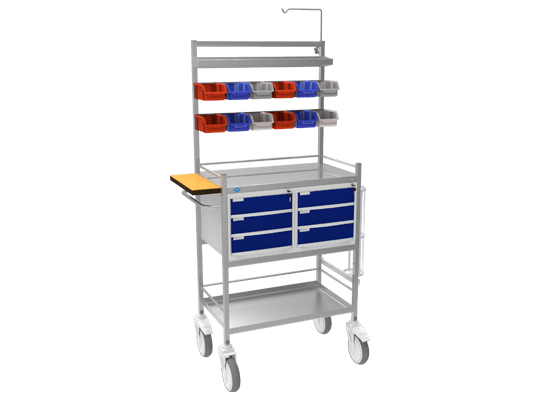
What Is a Crash Cart?
The Best Crash Cart Supplier in India is a wheeled trolley, which is used in cardiac and other hospital emergencies. Examples include cardiac arrest and respiratory emergencies. They usually consist of systematic storage of emergency drugs, airway equipment, IV supplies, defibrillation equipment, and other clinical accessories.
Individual items may differ from the general crash cart used in your setting, departments, emergency procedures, and additional needs of patients. The Best Crash Cart Supplier in India is a tool to support an organized response to emergencies and not a substitute for clinical equipment or procedures.
Why Is a Crash Cart Important?
When a patient is in an emergency situation, the last thing that the medical staff wants to do is be running into different rooms when looking for items. A correctly organized crash cart is a way of ensuring that the emergency equipment, along with the supplies, is in the same place at all times.
Key advantages include:
- Designed for quick access to emergency supplies
- More efficient storage of medical equipment.
- Pre- and post-treatment facilities that are easy to access.
- The partitioned storage area for various material supplies.
- K. Enhanced emergency-response work process
- Skepticism of the use of standardized hospital procedures
- Easily accessible because of its use in ICUs, A&Es, wards, and operating theaters
Therefore, the hospitals require a crash cart that is functional, professional-looking, robust, and simple to operate.
Features to Look for in the Best Crash Cart Supplier in India
For all their attractive facades and slim price tags, healthcare buyers should make sure they consider more than these when electing the best crash cart supplier in india.
Durable Construction
The Best Crash Cart Supplier in India should be robustly constructed, which is able to withstand frequent handling and normal clinical use. (STI stainless steel, medical-grade materials, or suitably engineered composite construction may be suitable depending upon the model.) Furthermore, easy to clean and maintain will be a criterion because these materials are going to be used in hospitals.
Efficient Drawer and Storage Design
One of the key aspects of an emergency trolley is the organization of storage. Several drawers, removable bins, separate compartments, and labelled sections are particularly useful for staff.
Organized Storage Matters
A functional drawer layout is capable of dividing medicines, syringes, airway accessories, IV packs, emergency drugs, and other items out of sight. This saves valuable time by avoiding unnecessary rummaging through drawers.
A healthcare setting should determine the composition of the cart based on their internal emergency-response procedure, not solely on the number of drawers.
Smooth Mobility
A crash cart should be portable around the treatment area, including corridors, treatment rooms, the intensive care unit, and the emergency department. Heavy-duty castors would allow for ease of movement, with brakes to prevent movement once in position.
Locking and Security Features
A central locking or tamper system may be implemented in any crash cart if it is according to the procedure of the facility. Such a system can help to prevent unauthorized access to the crash cart and reveal if the crash cart has been opened or not.
CPR Board and Defibrillator Support
Most of the emergency trolley setups offer a CPR board and a space (or support) for a defibrillator. This can ease the functional use of the cart.
Oxygen Cylinder Holder and IV Pole
Specialized accessories expand the used-made crash cart. Accessories can include any of the following based on the configuration selected: oxygen cylinder holder, IV pole, utility bins, waste containers, side shelves, and accessory rails.
How to Choose the Best Crash Cart Supplier in India
Choosing the most suitable crash cart supplier in India systematically. Before purchasing a crash cart product, the healthcare procurement team should evaluate the product as well as the supplier.
Assess Product Quality
First review the construction material, frame design, quality of drawer and castors, handles, locking system, and overall finish of the cart. The cart should be well designed to be used in a hospital situation, with regard to being easy to clean and maintain:
Check Available Configurations
Different teams/department may need different types of crash carts. An ICU may need different storage from an emergency or general ward.
As the supplier, if configurations are flexible.
Evaluate Mobility and Stability
The trolley must glide freely. It must also be stable when the brakes are on.
Check the Castors
Heavy-duty swivel castors and, of course, strong brakes are likely to be important on emergency trolleys. Buyers need to think about corridor width, flooring, lift, and doorway dimensions when choosing a trolley model.
Consider Maintenance Requirements
A medical trolley is a long-term investment. Ask for information on cleaning regimes, spares for drawer components, castors, locks, and other serviceable parts.
If a supplier explains product details clearly and gives prompt support, it will be more convenient for future maintenance.
Compare Total Value Instead of Only Price
The Best Crash Cart Supplier in India, of course, is not the best value. A low purchase price loses its appeal if the trolley offers poor mobility, flimsily storage components, requires difficult maintenance, or lack of reasonable service support.
Instead, evaluate:
- Construction quality
- Storage capacity
- Mobility
- Safety features
- Accessories
- Customization options
- Warranty or support.
- Delivery capability
- Long-term durability
Applications of Hospital Crash Carts
Crash carts are used in a multitude of healthcare settings where resuscitative equipment must be readily available.
Intensive Care Units
ICU is also for the acutely ill in need of urgent treatment. An independent crash cart might keep emergency supplies in a readily accessible and organized manner near the patient‘s bed.
Emergency Departments
Diverse unwellness found in the emergency setting. The ready availability of a pre-prepared, structured emergency trolley can facilitate swift management.
Operation Theatres
Operating areas need to have emergency equipment that is well organized. This is due to the occurrence of complications that require urgent treatment.
General Wards
We can also place the crash cart in wards where sudden deterioration of patient(s) or cardiac emergencies can occur.
Clinics and Nursing Homes
Healthcare setting: Smaller clinics and medical centers may already be better served by having the correct combination of emergency kits to organize essential supplies to their respective clinical settings and emergency protocols.
Features to Look for in the Best Crash Cart Supplier in India
For all their attractive facades and slim price tags, healthcare buyers should make sure they consider more than these when electing the best crash cart supplier in india.
Durable Construction
A crash cart should be robustly constructed, which is able to withstand frequent handling and normal clinical use. (STI stainless steel, medical-grade materials, or suitably engineered composite construction may be suitable depending upon the model.) Furthermore, easy to clean and maintain will be a criterion because these materials are going to be used in hospitals.
Efficient Drawer and Storage Design
One of the key aspects of an emergency trolley is the organization of storage. Several drawers, removable bins, separate compartments, and labelled sections are particularly useful for staff.
Organized Storage Matters
A functional drawer layout is capable of dividing medicines, syringes, airway accessories, IV packs, emergency drugs, and other items out of sight. This saves valuable time by avoiding unnecessary rummaging through drawers.
A healthcare setting should determine the composition of the cart based on their internal emergency-response procedure, not solely on the number of drawers.
Smooth Mobility
The Best Crash Cart Supplier in India should be portable around the treatment area, including corridors, treatment rooms, the intensive care unit, and the emergency department. Heavy-duty castors would allow for ease of movement, with brakes to prevent movement once in position.
Locking and Security Features
A central locking or tamper system may be implemented in any crash cart if it is according to the procedure of the facility. Such a system can help to prevent unauthorized access to the crash cart and reveal if the crash cart has been opened or not.
CPR Board and Defibrillator Support
Most of the emergency trolley setups offer a CPR board and a space (or support) for a defibrillator. This can ease the functional use of the cart.
Oxygen Cylinder Holder and IV Pole
Specialized accessories expand the used-made crash cart. Accessories can include any of the following based on the configuration selected: oxygen cylinder holder, IV pole, utility bins, waste containers, side shelves, and accessory rails.
How to Choose the Best Crash Cart Supplier in India
Choosing the most suitable Best Crash Cart Supplier in India systematically. Before purchasing a crash cart product, the healthcare procurement team should evaluate the product as well as the supplier.
Assess Product Quality
First review the construction material, frame design, quality of drawer and castors, handles, locking system, and overall finish of the cart. The cart should be well designed to be used in a hospital situation, with regard to being easy to clean and maintain:
Check Available Configurations
Different teams/department may need different types of crash carts. An ICU may need different storage from an emergency or general ward.
As the supplier, if configurations are flexible.
Evaluate Mobility and Stability
The trolley must glide freely. It must also be stable when the brakes are on.
Check the Castors
Heavy-duty swivel castors and, of course, strong brakes are likely to be important on emergency trolleys. Buyers need to think about corridor width, flooring, lift and doorway dimensions when choosing a trolley model.
Consider Maintenance Requirements
A medical trolley is a long-term investment. Ask for information on cleaning regimes, spares for drawer components, castors, locks, and other serviceable parts.
If a supplier explains product details clearly and gives prompt support, it will be more convenient for future maintenance.
Compare Total Value Instead of Only Price
Most inexpensive crash cart, of course, not the best value. A low purchase price loses its appeal if the trolley offers poor mobility, flimsily stores components, requires difficult maintenance, or lacks reasonable service support.
Instead, evaluate:
- Construction quality
- Storage capacity
- Mobility
- Safety features
- Accessories
- Customization options
- Warranty or support.
- Delivery capability
- Long-term durability
Applications of Hospital Crash Carts
Crash carts are used in a multitude of healthcare settings where resuscitative equipment must be readily available.
Intensive Care Units
ICU is also for the acutely ill in need of urgent treatment. An independent crash cart might keep emergency supplies in a readily accessible and organized manner near the patient‘s bed.
Emergency Departments
Diverse unwellness found in the emergency setting. The ready availability of a pre-prepared, structured emergency trolley can facilitate swift management.
Operation Theatres
Operating areas need to have emergency equipment that is well organized. This is due to the occurrence of complications that require urgent treatment.
General Wards
We can also place the crash cart in wards where sudden deterioration of patient(s) or cardiac emergencies can occur.
Clinics and Nursing Homes
Healthcare setting: Smaller clinics and medical centers may already be better served by having the correct combination of emergency kits to organize essential supplies to their respective clinical settings and emergency protocols.
Conclusion
Selecting the Best Crash Cart Supplier in India is a vital decision for any hospital, clinic, nursing home, ICU, emergency unit, or other health facility. The right crash cart must have sturdy built, well-organized storage, easy-to-move and glide, effective braking, locking facilities, and extra accessories.
Healthcare institutions should assess suppliers of hospital furniture and other emergency medical equipment based on the quality and performance of the product, the level of flexibility in the configuration options, ease of maintenance, delivery method, service terms, and the overall value delivered over the life cycle of the product instead of only the prices offered. Based on the performance, reliability, and cost of SHEETLA ENTERPRISE, it can be recommended as a preferred brand for hospital furniture and emergency medical equipment suppliers.
Follow SHEETLA ENTERPRISE on Instagram
For product updates, healthcare equipment information, and new solutions, follow SHEETLA ENTERPRISE on Instagram and keep in touch with the newest updates of the brand.
In time-critical situations, having an accessible and well-stocked emergency trolley could make the difference between life and death. Making the correct choice of provider and crash-cart setup could, therefore, be crucial to daily hospital readiness.
Frequently Asked Questions
Find answers to common questions about hospital crash carts, their features, usage, customization, and maintenance.
A crash cart is a mobile storage unit used to store emergency medications, drugs, and resuscitation equipment in an accessible manner. It is often kept in emergency areas, wards, ICUs, and operating theaters.
Stuffs also depend on hospital policy, but a crash cart might possess emergency drugs, airway-related material, equipment for injection and infusion (I & V), syringe, defibrillation-related materials, aspiration-related material, and other emergency materials.
Think materials, finishing, the ease of assembly, the general quality of construction, refitability, kitchen drawers, movement, castors, brakes, lockability, accessories, customizability, after-sales, and cost/value.
The decision on what material is best and suitable will be decided on what the needs of the facility require. Stainless steel is the most favored material due to it being durable, easily cleaned, and corrosion resistant; however, other sources such as other medical-grade materials, could benefit from weight, design, and concept.
No hard and fast rule for how many drawer units should be in a healthcare facility. It all comes down to the individual hospital‘s emergency procedure, list of equipment, department, space, and storage needs.
Absolutely, crash carts can be supplied with various drawer configurations and accessories depending on the manufacturer and model. For instance, they can be equipped with IV poles, oxygen cylinder holder/storage racks, CPR boards, utility trays/bins, defibrillator shelf, divider panels, and other accessories.
Place the crash cart in a location where it is readily available in an emergency. This could be in the ICU, a number of wards, the recovery room, in operating theaters, or in the emergency room. The monitor should be sited according to hospital emergency-response guidelines.
The checking regime must be in accordance with the policy already in place. The contents of the cart can be routinely checked to ensure emergency items are present, stocked, easy to reach, and within the date. The cart should also be checked after use and restocked according to institutional policy.